Friday, April 29, 2011

Chapter 12: The Great Plains and Prairies

The European settlers had encountered several environmental surprises on the Great Plains. One negative thing about the Great Plains is that they have the coldest winters and hottest summers. The weather is very extreme.

Contrary to many peoples' belief of the land being flat, the Great Plains has a varied landscape.  Another misconception about the Great Plains is that the people all share the same ethnic background. However, the Great Plains actually has many different cultures which make is so diverse.

The strongest images of a place are portrayed in the songs, folktales, and literature. I did not realized that the land influences the work of authors so much as it does.

 The agriculture in the Great Plains is large scale. Instead of having man labor work the fields they have intensive machinery use. The most important crop grown in the region by far is wheat.

Tuesday, April 19, 2011

Chapter 11: The Agricultural Core

 The agricultural core is defined by its aura of small-town, rural America. The cultural tones underlying it are strong and indisputably agrarian. The people are politically and socially conservative, independent and often friendly to strangers. Unlike Arizona, most of the agricultural core's residents are white descendants of waves of foreign-born migrants. Most people in Arizona are of white descendants but just not foreign. In Lake Havasu City specifically, there are mainly elder Caucasians. There is not as many people with diverse backgrounds in Arizona as there is in California.

Just like the people in the agricultural core, the people in Arizona are also politically and socially conservative, independent and often friendly to strangers. This is one of the main things that attract my fiance and I to Arizona.  California can be filled with stuck up people at times. It is nice to be around genuinely nice people who are laid bacck.

The agricultural core's landscape rolls gently with a few areas of flat or hilly terrain. The persistently rolling landscape permits good soil drainage and restricts swamps to small areas. Their soil falls into two basic groups- alfisols and mollisol. Alfisols form under conditions of moderate moisture and usually associated with coniferous or mixed forests. Mollisols are suited for grain production and are most fertile soil group in the agricultural core.

Sunday, April 17, 2011

Chapter 10: The Southern Coastlands- On the Subtropical Margin

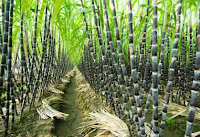
    Unlike the Southern Coastlands, Arizona is a desert with dry, hot weather. The Southern Coastlands are a subtropical place that is very humid. One of the main things I love about Arizona is that it is a dry heat (being a girl and all I like that I can go outside and my hair won't get frizzy from the humidity). However, because of their humid weather, they are able to grow crops that most other places cannot. The region's most important specialty crops are citrus fruits, rice, and sugarcane. Only few places can successfully grow sugarcane, it's growing conditions are very specific. The leading cash crop in Arizona isn't even a food it is cotton. Due to their hot weather, they are limited to what they can farm. Cotton seems to be the most successful, which makes sense.
      Quite similar to Lake Havasu City, Florida is a tourist attraction, and a prime place for people to retire. The one bad thing about the Southern Coastlands' subtropical weather is the inevitable mid-winter frost reaches southern Florida. They also have more sporadic, dramatic, and destructive hurricanes than in North America. Hurricanes are created by intense solar heating over large bodies of warm water . Then a massive low-pressure atmospheric pocket forms, drawing in warm, moist air. The deeper the pocket, the faster the wind flows and the more destructive the storm's potential.

The ability to reach inland sources of exchange is more important in creating trade than physical facilities. Rail connections strengthened each harbor's access to North America's major inland markets. However, the city was well established before highway connections reinforced its growth.

The two of the three leading petroleum-producing states are Texas and Louisiana (Alaska being the third). Arizona currently has no oil refineries and only two pipelines which transport almost all of Arizona’s gasoline from Texas, New Mexico and California. It takes a gallon of gasoline approximately 7 days to travel through the West Line from California to Phoenix and approximately 6 days to travel on the East Line from El Paso, Texas to Phoenix. A small percentage of the state’s gasoline is trucked in from neighboring states. Arizona’s state and federal gasoline taxes are 37.4 cents per gallon. Comparatively, California’s state and federal taxes are 60 cents per gallon (another reason why moving to Arizona doesn't sound half bad), while Nevada consumers pay 51.9 cents per gallon. (Source: American Petroleum Institute)


http://www.azag.gov/consumer/gasoline/gas.htmlhttp://www.city-data.com/states/Arizona-Agriculture.html

Tuesday, March 15, 2011

Chapter 9:The Changing South

As stated in this chapter, Southerners are truly proud to call themselves southerners. They passionately believe in their freedoms and traditions. Their culture is so rich with their country music, delicious food and just their laid back mentality. The slaves' presence in the south meant that their influence on their culture was heavy. For example, their speech patterns, diet, and music was highly influenced by the African slaves.


The religion data for the Maricopa County in Arizona shows that 43% of people are Catholic. This seems to be normal in most U.S. States this is the case. However, in the South, they are adherent to the evangelical Protestant religions. The Baptists are dominating in the South. 


More than one-fifth of Arizonans live in poverty, a figure higher than anywhere else in the nation except Mississippi. Figures from the U.S. Census Bureau show nearly 1.4 million Arizonans in households earning less than the federal poverty level - about 21.2 percent. This is definitely shocking news to me. Coming from a small middle class town, I did not know that Arizona is the number 2 state in poverty.

Racial segregation, unfortunately, seems to live on. Recently in Tempe, Arizona at Arizona State University, they had English 101 and 102 classes opened to "Native Americans only".This is not the kind of racial segregation people are used to seeing, however, it is the kind of segregation happening in this modern day world.

                                          
Unlike the South, Arizona does not want more government involvement in their daily lives. It did help the South in economic and social matters.


http://azstarnet.com/news/local/article_551a7372-415a-5dc5-a27d-ab19a1171e81.html

Chapter 8: Appalachia and The Ozarks

The Appalachian Mountain's rugged landscape played a major role in the settlement history of the United States. Without the mountains acting as a barrier, the European settlement may have spread inland more thinly and more quickly. The Appalachians definitely define the North America's resource geography and chart on economic history and population distribution. 


The Appalachia and the Ozark are found in the following states: Missouri, Oklahoma, Arkansas, Pennsylvania, West Virginia, Tennessee, Kentucky, and it touches neighboring states as well. 
Although the Appalachia and Ozark's don't reach to Arizona, I can use this topic to talk a little about the Grand Canyon.


The Grand Canyon can be found in Arizona. This phenomenal 277 mile long and 18 mile wide chasm was formed by the Colorado River.  This beauty took 3 to 6 million years to form,and erosion continues to change its contour. Although I have been to Arizona hundreds of times,sadly, I still have not made it to visit the Grand Canyon!


http://www.explorethecanyon.com/explore-learn/grand-canyon-facts.cfm

Chapter 7: The Bypassed East

The area that compromises the Atlantic Providences of Canada as well as northern New England and the Adirondacks of New York is called the Bypassed East. It lies in a transportation shadow thrown by nearby regions. Most of the Bypassed East is part of the Appalachian Highlands' northeastern extension.The climate in the Bypassed East is where polar, continental and maritime weather systems mix. It is sometimes hot, sometimes cold, and normally humid.It differs from the climate of Arizona where it us usually hot and dry. Higher inland elevations further increase the substantial climactic difference between the region's coastal and interior lands.

The agriculture's regional importance has continued to decline across most of the Bypassed East. Arizona's agricultural output is evenly distributed between crops and livestock. About 47% of Arizona's agricultural production is in livestock. The other 53% is in crops. Arizona's top five agricultural products are cattle and calves, lettuce, dairy products, cotton, and hay. Its biggest crop is lettuce, comprising about 20% of the state's total crop production.


They also are a leading cotton-producing state ranking 10th in the nation. Hay and greenhouse and nursery production each generate about 1/2 of the revenues provided by cotton. Beef cattle, including calves are the leading source of Arizona farm income, followed by dairy products. Some hogs and sheep and lambs are also produced in the state.
As far as mining goes Copper is the most important mined product of Arizona.


http://www.netstate.com/economy/az_economy.htm

Thursday, March 3, 2011

Chapter 5: The North American Manufacturing Core

Most everything we come in contact with in this world is manufactured. Although many items are manufactured out of the United States, industry located in the U.S. and Canada still produce most of what people in both countries consume. Manufacturing's role in defining a continental core suggests how important this form of economic activity is in defining the character of the United States and Canada. The manufacturing core is very close to the important ports, main communication centers, and the financial centers in both countries.


The United States has become a service economy and many states, Arizona included, generate most of their revenue through service industries.The spending of tourists and retired people contribute a lot to the revenue.
Arizona's manufacturing revenues are generated from high tech products like computers, electronic equipment, and aerospace vehicles.
Manufacturers add value to raw products by creating manufactured items. For example, cotton cloth becomes more valuable than a boll of cotton through manufacturing. In terms of value added, Computer and electronic equipment (computer microchips) and electronic components, including communication systems, are Arizona's most important manufactured goods. Arizona’s manufacturing exports fell 16 percent during this time while overall U.S. manufacturing exports rose 70 percent. Manufactured exports support 23 percent of Arizona's manufacturing jobs.


http://www.netstate.com/economy/az_economy.htm
http://www.nam.org/~/media/F8DA7ACD941C46BDAA9D2B430D7102EF.ashx